9 Things to Do Before Junking a Car
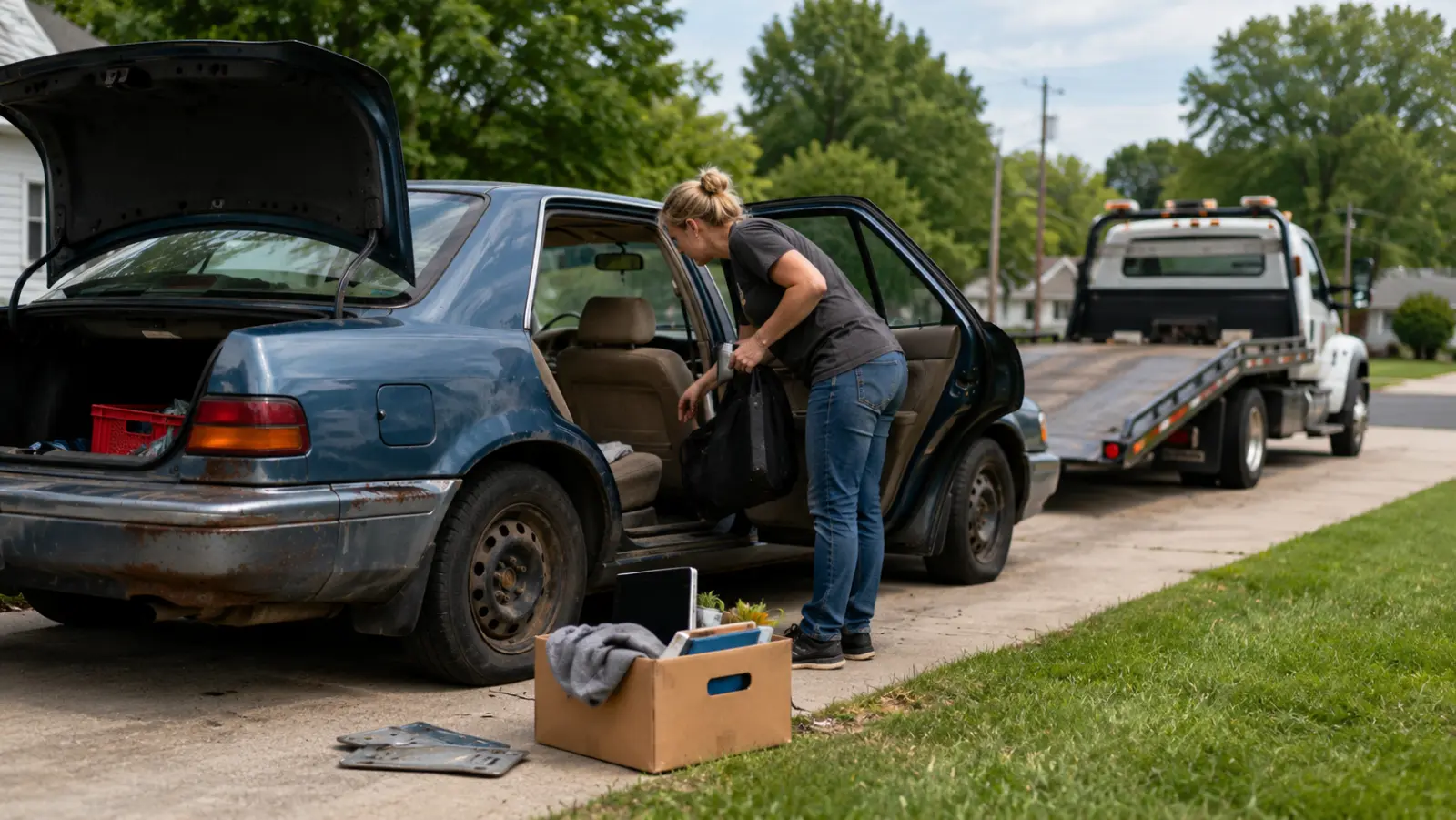
Deciding to junk a car is easy. Knowing what to do before junking a car is where most people get tripped up. A little preparation goes a long way toward protecting yourself legally, getting a fair payout, and making the whole process run smoothly. Whether this is your first time or you need a refresher, this checklist covers everything you need to handle before handing over the keys.
1. Remove Personal Belongings
Start with a thorough sweep of the interior. Check the glove compartment, center console, under the seats, the trunk, and any door pockets. People routinely find sunglasses, phone chargers, important mail, spare change, and the occasional item they'd given up on entirely. Once a vehicle leaves for the junkyard, retrieving anything left behind becomes difficult or impossible.
Don't overlook cargo areas in SUVs and trucks, and check under floor mats too.
2. Remove Valuable Parts
Not everything worth money goes with the car. Aftermarket stereos, subwoofers, backup cameras, and upgraded wheels are yours to keep until the moment of sale. If the vehicle has a newer battery in good condition, that's worth pulling as well.
Research whether any parts have resale value before assuming the junkyard should have them. Selling components separately takes a bit more effort, but it can meaningfully increase what you walk away with overall.
3. Remove License Plates
In Virginia, license plates belong to the owner, not the vehicle. When you sell or junk a car, the plates stay with you. Remove them before the tow truck arrives and either transfer them to another vehicle, return them to the DMV, or surrender them if you're canceling the registration entirely.
Leaving plates on a junked car creates unnecessary exposure. Until those plates are officially off your name, any activity tied to them could come back to you.
4. Cancel Insurance
Once the vehicle is gone, there's no reason to keep paying for coverage on it. Contact your insurance provider and cancel the policy on that vehicle effective on or around the pickup date. If you have other vehicles on the same policy, ask about any discount adjustments that may apply.
Some insurers issue a small refund for unused prepaid premiums. It's a minor detail, but worth a quick call.
5. Empty Fuel and Fluids
Most junkyards accept vehicles as-is, but it's worth knowing the condition of the vehicle you're handing off. If the gas tank has a meaningful amount of fuel in it, consider draining it before pickup or using it in another vehicle. Gas is one commodity that's easy to recapture before junking a car.
Other fluids, including coolant, brake fluid, and motor oil, are typically handled by the salvage yard during the recycling process. You generally don't need to drain these yourself, but check with the junkyard if you have questions about their procedures.
6. Prepare Paperwork
A clean title is the most important document in any junk car transaction. Most Virginia junkyards require a valid title to complete the sale. If you've misplaced yours, you can request a duplicate through the Virginia DMV before proceeding.
Gather any additional documentation that may be useful, such as registration records or a bill of sale. Having everything organized in advance keeps the transaction from stalling at the last moment.
7. Get Quotes from Multiple Junkyards
Cash for junk cars varies more than most people expect. Offers depend on the vehicle's year, make, model, condition, mileage, and current scrap metal prices, all of which fluctuate. Getting quotes from a few different junk yards before committing takes only a few minutes and gives you a realistic picture of what your vehicle is worth.
Be cautious of quotes that sound unusually high, as some buyers will lower the offer when they arrive for pickup. Reputable buyers in the Richmond, VA area stand behind their initial quotes.
8. Prepare Vehicle for Pickup
Most junk car buyers offer free towing, so you typically don't need to arrange transportation. What you do need is reasonable access. Clear the driveway or surrounding area so the tow truck can maneuver without issue, and make sure someone is available at the time of pickup to sign paperwork and hand over the title.
If the vehicle isn't on your property, confirm the pickup location in advance and verify that access won't be a problem.
9. Report Sale to Local DMV
After the sale, notify the Virginia DMV that the vehicle is no longer in your possession. This step protects you from liability if the car is later involved in an accident, cited for a violation, or misused before it reaches the crusher.
You can typically complete this notification online or in person. It takes only a few minutes and creates a clear record that your ownership ended on a specific date.
Ready to Sell Your Junk Car in the Richmond, VA, Area?
At Chesterfield Auto Parts, we make it simple. We've been buying junk cars since 1947, and we offer honest quotes, free towing, and a straightforward process from first call to final payment. Now that you understand what to do before junking your car, reach out to our team or visit one of our three Richmond-area locations to get started.